The Digital Education Lab: Your key to peer insights on KESIMPTA
Tap into the RMS experts and unlock the answers to your questions on KESIMPTA
This information is intended for US health care professionals only.
This information is intended for US health care professionals only.
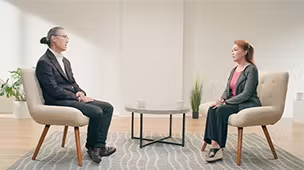
Ann Cabot, DO; Mirla Avila, MD
 Replay
:5
Cancel 
Copy Link
Like
Discover what KESIMPTA offered to a real RMS patient who was looking to switch therapies
View Transcript +
[Dr Avila]
We often hear patients expressing interest in changing their therapies for relapsing multiple sclerosis, or RMS. Today we are here to discuss a real-world patient who was on an relapsing MS infusion therapy and was interested in learning more about other disease-modifying therapies, or DMTs. This is a case that highlights shared decision-making between Dr Cabot and her patient, Jack, to find an appropriate therapy to help Jack reach his treatment goals
[Dr Cabot]
Now, Dr Avila, I want to talk about a patient of mine—let's call him Jack—who was on an infusion therapy for a couple of years. But he had recently brought up his interest in learning more about treatment options that might better align with his lifestyle
[Dr Avila]
Thank you for the context, Dr Cabot. Would you tell us more about Jack's story?
[Dr Cabot]
Yes, Jack is a 35-year-old male with relapsing MS. He initially presented with left hand weakness and vertigo. His MRI showed multiple lesions, which were characteristic for demyelinating disease, and he was initially started on an injectable disease modifying therapy, and then switched to an oral disease modifying therapy
I started seeing Jack at this point, and we switched him to an infusion therapy. At the time of his appointment, Jack expressed an interest in switching therapies
[Dr Avila]
When you were discussing other treatment options with Jack, which characteristics or aspects were important to him?
[Dr Cabot]
Jack expressed to me that he felt it was difficult for him to schedule infusions and travel to and from the infusion center for his treatments. Because of this, he wanted to find a treatment that allowed him the flexibility of administering at home
[Dr Avila]
I have similar experiences with my patients because many of my patients live in rural areas and need to drive hours to the nearest infusion site. This may not be feasible for some, so
at-home administration is a topic of discussion for my patients
Which therapy did you recommend Jack switch to when he mentioned his concerns?
[Dr Cabot]
Jack and I reviewed a variety of different options. After aligning on his treatment goals and personal preferences, we decided to get him started on KESIMPTA
[Dr Cabot]
KESIMPTA is indicated for the treatment of relapsing forms of MS, to include clinically isolated syndrome, relapsing-remitting disease, and active secondary progressive disease, in adults
KESIMPTA is contraindicated in patients with active hepatitis B virus infection
You can see Important Safety Information on KESIMPTA within this video and on the adjacent panel
[Dr Avila]
What made you consider KESIMPTA for Jack and other relapsing MS patients like him?
[Dr Cabot]
Jack, in particular, communicated that the route of administration and the ability to self-administer were 2 of the most important factors for him. As Jack's physician, listening to his lifestyle preferences was very important to me in this shared decision-making process
With KESIMPTA, when the patient is ready to administer, it typically takes 1 minute a month. The once-monthly dosing begins after the initial dosing period, which consists of 20-mg subcutaneous doses at weeks 0, 1, and 2
[Dr Avila]
I hear from many of my patients that they are happy with this aspect of KESIMPTA
[Dr Avila]
As a health care professional, I value efficacy first and foremost. So, I would want to choose a treatment approach where I felt confident in therapy's efficacy
When we look at efficacy data, KESIMPTA demonstrated a reduction in relapsing MS disease activity in Phase 3 trials, reducing MRI activity, T1 and T2 lesions, relapses, and delaying disability progression compared to teriflunomide
[Dr. Avila]
Early and continued relapse reduction was observed over the study period. These results are based on a post hoc analysis of pooled data from ASCLEPIOS I and II where KESIMPTA demonstrated reductions in the annual relapse rate within the first 3 months, and time intervals over 2 years. No conclusions can be drawn
Why was this data important for you and Jack? How did you explain the efficacy of KESIMPTA to him?
[Dr Cabot]
One thing I told Jack and I like to tell all my patients when explaining efficacy data is the fact that KESIMPTA was studied in a head-to-head trial versus teriflunomide. This is reassuring to both practitioners and patients like Jack, especially when the data showed statistical superiority in terms of efficacy
[Dr Avila]
Definitely. The head-to-head efficacy is one of the big reasons why some of my patients and I have chosen KESIMPTA
How is Jack doing now since starting KESIMPTA?
[Dr Cabot]
So far, Jack has expressed that he is doing well on KESIMPTA, which makes me happy. In his most recent appointment, his MRI, labs, and symptoms were stable, and he showed no changes in his spine lesions. As a health care professional, hearing that the patient feels good about the decision, but also seeing that they're doing well clinically is a really great feeling
[Dr Avila]
I agree, it is very rewarding to see patients doing well on a different therapy
With disease-modifying therapies for RMS, many health care professionals and patients prioritize safety. Patients usually feel knowledgeable and comfortable with their current therapies. So, when they do switch for route of administration preferences, one of the main questions they have is around the safety profile of the new agent they are considering to switch to
[Dr. Avila]
The most common adverse reactions with incidence greater than 10% in patients taking KESIMPTA were upper respiratory tract infections, headache, injection-related reactions, and local injection-site reactions
The overall rate of infections and serious infections in patients treated with KESIMPTA was similar to teriflunomide
In this chart, you can see adverse reactions with an incidence of at least 5% with KESIMPTA and a greater incidence than teriflunomide
What did the safety profile of KESIMPTA mean to your patient Jack?
[Dr Cabot]
For Jack and for many of my patients, safety is a huge component when making a treatment decision. As I mentioned previously, KESIMPTA was studied in head-to-head trials against teriflunomide, and so to not only show efficacy but also that KESIMPTA had a similar safety profile to a first-line oral medication is appealing to patients
[Dr Cabot]
Not only that, but the availability of the long-term safety profile of KESIMPTA vs teriflunomide up to 5 years is important to me as a health care professional, and to patients like Jack as well. The data demonstrated that no new safety signals arose within KESIMPTA
The most common adverse events were infections; the most frequent infections in the overall safety population were COVID-19, nasopharyngitis, upper respiratory tract infections, and urinary tract infections
Despite this, it's important to note that ALITHIOS is an ongoing trial and that the data presented are at an interim analysis. No conclusions of clinical outcomes can be drawn
[Dr Avila]
I agree. Having an agent with a head-to-head safety profile against an active comparator and the availability of long-term safety data can be encouraging for patients, especially when they see similarity in the rates of adverse events in the ALITHIOS trial
[Dr Avila]
Continuing on the topic of safety, one concern we hear from patients is the idea of an injection
Injection-related reactions with systemic symptoms occurred most commonly within 24 hours of the first injection, but were also observed with later injections
With KESIMPTA, the incidence of systemic injection-related reactions was highest with the first injection occurring in 14.4% of patients, then decreasing with subsequent injections occurring in 4.4% in the second, and less than 3% of patients in the third injection
Symptoms observed included fever, headache, myalgia, chills, and fatigue, and were predominantly mild to moderate in severity in 99.8% of patients
The 4-year results of ALITHIOS was consistent with those reported in ASCLEPIOS I and II, including continuous KESIMPTA patients and those switching from the teriflunomide arm
How would you present the injection data to a patient and what would you highlight?
[Dr Cabot]
In my experience, nurses play a huge role in patient education around KESIMPTA. We have pamphlets that our nurses give to every patient that highlight key safety points, including injection-related reactions, to make patients feel informed with starting treatment
[Dr Avila]
At my practice site, unfortunately, I do not have a nurse who focuses on patient education. So I usually educate patients on safety and also on administration
Tell us more about the administration of KESIMPTA and how would you describe it to Jack when he was switching over to KESIMPTA
[Dr Cabot]
So, for Jack's case, he had made it clear to me that he was looking to switch his therapy to better align with his desired lifestyle
[Dr Cabot]
Jack mentioned that he wanted a therapy that he could self-administer so that he would not have to schedule appointments and travel to an infusion center
Taking that into consideration, I let Jack know that KESIMPTA is available as a subcutaneous auto-injector, called the Sensoready Pen, that can be administered at home
It's a preloaded device with an audible and visual cue to help with administration
When a patient is ready to administer, it typically takes only one minute a month. Once-monthly dosing begins after the initial dosing period, which consists of 20-mg subcutaneous doses at weeks 0, 1, and 2
[Dr Avila]
For needle-averse patients, the design of the Sensoready Pen allows the user not to see the needle
For example, I had a patient who when initially diagnosed he said I don't want anything to do with injectables. I said, listen, I understand how you feel, but let me demonstrate how KESIMPTA is administered. Once he was able to see the pen for himself, he wanted to give it a try. He has been on KESIMPTA now for 6 months and has been doing well with the self-administration
For some patients, it really helps to see the pen before making a decision, especially for the needle-averse patients
[Dr Avila]
Now that we've discussed KESIMPTA, how was your experience with starting Jack on KESIMPTA?
[Dr Cabot]
That's a great question Dr Avila. KESIMPTA has this great program called the Alongside Bridge Program, which covers patients for up to 12 months while coverage is being pursued
It's much easier for me to start a medication like KESIMPTA for patients like Jack because the bridge program has been very easy to navigate. I can prescribe the medication and feel confident that, you know, if I write it, at least I'll get some feedback very quickly on how things are going
[Dr Avila]
I have also had the same experience with the bridge program. It has been very helpful with coverage and getting KESIMPTA to my patients quickly
[Dr Avila]
Thank you for sharing your experience with your patient, Jack. His patient case really resonates with what I commonly see in my practice site. Before we wrap this up, what would you say KESIMPTA has to offer patients looking to switch therapies?
[Dr Cabot]
With KESIMPTA, we get the flexibility of self-administration.
What about you? What would you say KESIMPTA has to offer for your patients?
[Dr Avila]
I use KESIMPTA in many of my patients. And the main thing that stands out to me with KESIMPTA is the route of administration and the flexibility that the subcutaneous route may provide.
Ultimately, it is very important to consider that the decision of changing a patient's treatment is a shared decision
[Voiceover:]
Important Safety Information
Infections
Delay KESIMPTA administration in patients with an active infection until the infection is resolved. Vaccination with live-attenuated or live vaccines is not recommended during treatment with KESIMPTA and after discontinuation, until B-cell repletion.
Injection-Related Reactions
Management for injection-related reactions depends on the type and severity of the reaction.
Reduction in Immunoglobulins
Monitor the level of immunoglobulins at the beginning, during, and after discontinuation of treatment with KESIMPTA until B-cell repletion. Consider discontinuing KESIMPTA if a patient develops a serious opportunistic infection or recurrent infections if immunoglobulin levels indicate immune compromise.
Fetal Risk
May cause fetal harm based on animal data. Advise females of reproductive potential of the potential risk to a fetus and to use an effective method of contraception during treatment and for at least 6 months after the last dose.
KESIMPTA Important Safety Information | Click here for full Prescribing Information, including Medication Guide.

KESIMPTA Important Safety Information | Click here for full Prescribing Information, including Medication Guide. ▾
IMPORTANT SAFETY INFORMATION
Contraindications: KESIMPTA is contraindicated in patients with active hepatitis B virus (HBV) infection, or history of hypersensitivity to ofatumumab, or life-threatening injection-related reaction to KESIMPTA. Hypersensitivity reactions have included anaphylaxis and angioedema.
WARNINGS AND PRECAUTIONS
Infections: Serious, including life-threatening or fatal, bacterial, fungal, and new or reactivated viral infections have been observed during and following completion of treatment with anti-CD20 B-cell depleting therapies.
INDICATION
KESIMPTA is indicated for the treatment of relapsing forms of multiple sclerosis (MS), to include clinically isolated syndrome, relapsing-remitting disease, and active secondary progressive disease, in adults.
Indication
KESIMPTA is indicated for the treatment of relapsing forms of multiple sclerosis (MS), to include clinically isolated syndrome, relapsing-remitting disease, and active secondary progressive disease, in adults.
Important Safety Information
Contraindications: KESIMPTA is contraindicated in patients with active hepatitis B virus (HBV) infection, or history of hypersensitivity to ofatumumab, or life-threatening injection-related reaction to KESIMPTA. Hypersensitivity reactions have included anaphylaxis and angioedema.
Warnings and Precautions
Infections: Serious, including life-threatening or fatal, bacterial, fungal, and new or reactivated viral infections have been observed during and following completion of treatment with anti-CD20 B-cell depleting therapies. The overall rate of infections and serious infections in KESIMPTA-treated patients was similar to teriflunomide-treated patients (51.6% vs 52.7%, and 2.5% vs 1.8%, respectively). The most common infections reported by KESIMPTA-treated patients in relapsing MS (RMS) trials included upper respiratory tract infection (39%) and urinary tract infection (10%). Delay KESIMPTA administration in patients with an active infection until resolved.
Consider the potential increased immunosuppressive effects when initiating KESIMPTA after an immunosuppressive therapy or initiating an immunosuppressive therapy after KESIMPTA.
Hepatitis B Virus: Reactivation: No reports of HBV reactivation in patients with MS treated with KESIMPTA. However, HBV reactivation, in some cases resulting in fulminant hepatitis, hepatic failure, and death, has occurred in patients treated with ofatumumab at higher intravenous doses for chronic lymphocytic leukemia (CLL) than the recommended dose in MS and in patients treated with other anti-CD20 antibodies.
Infection: KESIMPTA is contraindicated in patients with active hepatitis B disease. Fatal infections caused by HBV in patients who have not been previously infected have occurred in patients treated with ofatumumab at higher intravenous doses for CLL than the recommended dose in MS. Perform HBV screening in all patients before initiation of KESIMPTA. Patients who are negative for HBsAg and positive for HB core antibody [HBcAb+] or are carriers of HBV [HBsAg+], should consult liver disease experts before starting and during KESIMPTA treatment.
Progressive Multifocal Leukoencephalopathy: No cases of progressive multifocal leukoencephalopathy (PML) have been reported for KESIMPTA in RMS clinical studies; however, PML resulting in death has occurred in patients being treated with ofatumumab at higher intravenous doses for CLL than the recommended dose in MS. In addition, JC virus infection resulting in PML has also been observed in patients treated with other anti-CD20 antibodies and other MS therapies. If PML is suspected, withhold KESIMPTA and perform an appropriate diagnostic evaluation. If PML is confirmed, KESIMPTA should be discontinued.
Vaccinations: Administer all immunizations according to immunization guidelines: for live or live-attenuated vaccines at least 4 weeks and, whenever possible at least 2 weeks prior to starting KESIMPTA for inactivated vaccines. The safety of immunization with live or live-attenuated vaccines following KESIMPTA therapy has not been studied. Vaccination with live or live-attenuated vaccines is not recommended during treatment and after discontinuation until B-cell repletion.
Vaccination of Infants Born to Mothers Treated with KESIMPTA During Pregnancy. For infants whose mother was treated with KESIMPTA during pregnancy, assess B-cell counts prior to administration of live or live-attenuated vaccines. If the B-cell count has not recovered in the infant, do not administer the vaccine as having depleted B-cells may pose an increased risk in these infants.
Injection-Related Reactions and Hypersensitivity Reactions: KESIMPTA can result in systemic injection-related reactions and hypersensitivity reactions, which may be serious or life-threatening. Injection-related reactions with systemic symptoms occurred most commonly within 24 hours of the first injection, but were also observed with later injections. There were no life-threatening injection reactions in RMS clinical studies.
In the post-marketing setting, additional systemic injection-related reactions and hypersensitivity reactions have been reported, including anaphylaxis, angioedema, pruritus, rash, urticaria, erythema, bronchospasm, throat irritation, oropharyngeal pain, dyspnea, pharyngeal or laryngeal edema, flushing, hypotension, dizziness, nausea, and tachycardia. Most cases were not serious and occurred with the first injection. Symptoms of systemic injection-related reactions may be clinically indistinguishable from acute hypersensitivity reactions.
The first injection of KESIMPTA should be performed under the guidance of an appropriately trained health care professional. If systemic injection-related reactions occur, initiate appropriate therapy. Patients who experience symptoms of systemic injection-related reactions or hypersensitivity reactions with KESIMPTA should be instructed to seek immediate medical attention. If local injection-related reactions occur, symptomatic treatment is recommended.
Reduction in Immunoglobulins: As expected with any B-cell depleting therapy, decreased immunoglobulin levels were observed. Monitor the levels of quantitative serum immunoglobulins during treatment, especially in patients with opportunistic or recurrent infections and after discontinuation of therapy until B-cell repletion. Consider discontinuing KESIMPTA therapy if a patient with low immunoglobulins develops a serious opportunistic infection or recurrent infections, or if prolonged hypogammaglobulinemia requires treatment with intravenous immunoglobulins.
Liver Injury: Clinically significant liver injury, without findings of viral hepatitis, has been reported in the post-marketing setting. Signs of liver injury have occurred weeks to months after administration. Patients treated with KESIMPTA found to have an alanine aminotransferase or aspartate aminotransferase greater than 3 times the upper limit of normal (ULN) with serum total bilirubin greater than 2 times the ULN are potentially at risk for severe drug-induced liver injury.
Obtain liver function tests prior to initiating treatment. Monitor for signs and symptoms of hepatic injury during treatment, including new or worsening fatigue, anorexia, nausea, vomiting, right upper abdominal discomfort, dark urine, or jaundice. If symptoms of liver injury are reported, measure serum aminotransferases, alkaline phosphatase, and bilirubin levels. Discontinue KESIMPTA if liver injury is present and an alternative etiology is not identified.
Fetal Risk: Based on animal data, KESIMPTA can cause fetal harm due to B-cell lymphopenia and reduce antibody response in offspring exposed to KESIMPTA in utero. Transient peripheral B-cell depletion and lymphocytopenia have been reported in infants born to mothers exposed to other anti-CD20 B-cell depleting antibodies during pregnancy. Advise females of reproductive potential to use effective contraception while receiving KESIMPTA and for at least 6 months after the last dose.
Most common adverse reactions: Most common adverse reactions (>10%) are upper respiratory tract infection, headache, injection-related reactions, and local injection-site reactions.
Please see full Prescribing Information, including Medication Guide.
KESIMPTA, the KESIMPTA logo, and SENSOREADY are registered trademarks of Novartis AG.

Use of this website is governed by the Terms of Use and Privacy Policy.
Copyright © 2026 Novartis Pharmaceuticals Corporation. All rights reserved.
1/26
FA-11589063